
5 March 2026 2 menit
Scars Across The Nickel Lands: Stories from the IWIP Industrial Zone
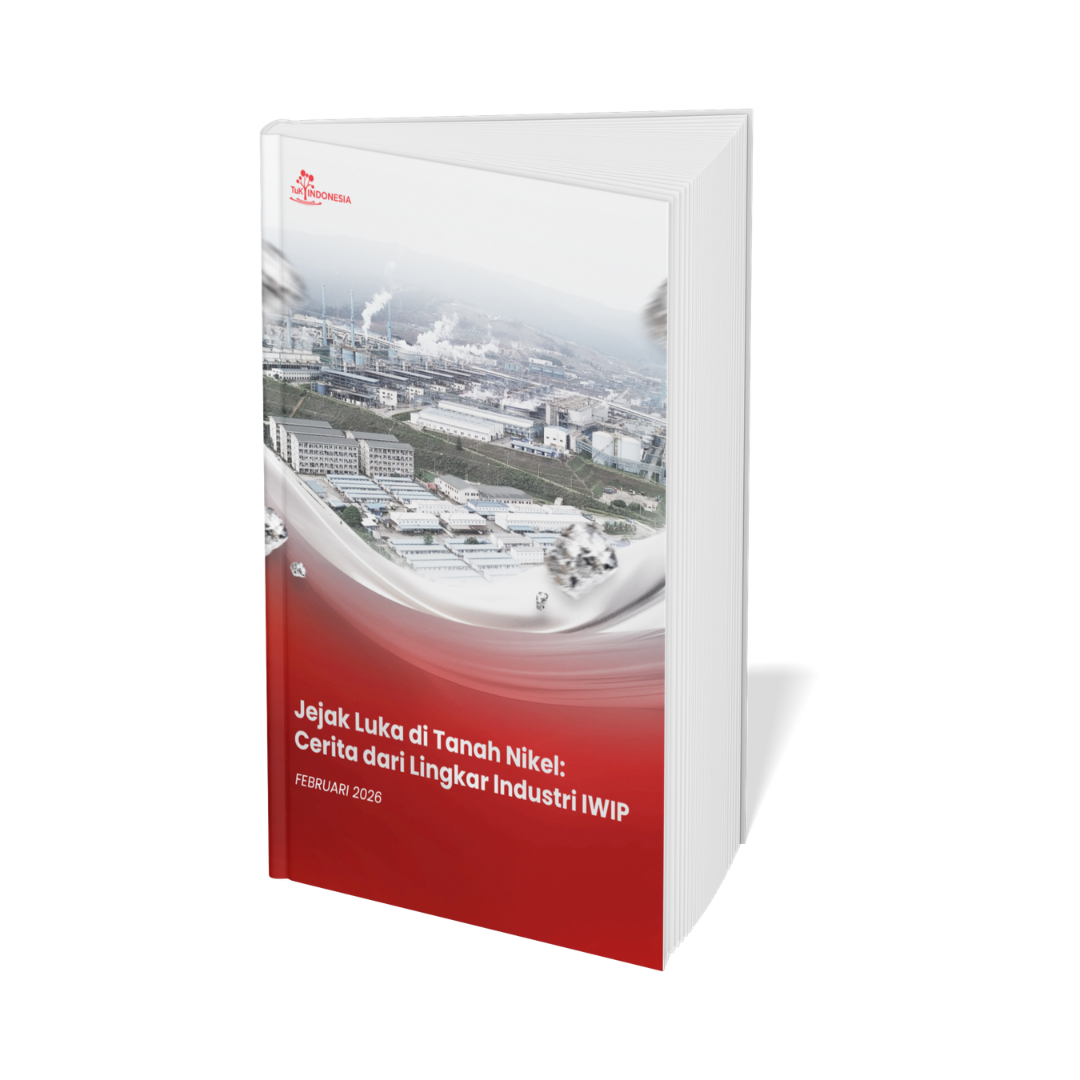
The work done in this research was born out of a growing sense of unease: amid the grand narrative of the global energy transition and Indonesia’s ambition to become a key player in the world’s electric vehicle supply chain, the situation begs a fundamental question—who are the sole benefactors, and who are the ones left bearing the bloody cost of progress?
We, TuK INDONESIA, a civil society organization focused on transforming the governance of natural resources and financial systems toward greater fairness and sustainability, believe that nickel downstreaming cannot be measured through the narrow lens of investment returns, production rates, or global market position. The true value of downstreaming must only be judged by how well it manages to align with the protection of people’s rights, the safeguarding of ecological capacity, and the guarantee that any added strategic value stays within the country.
Utilizing a supply-chain traceability approach, this research follows nickel’s journey from mine to export, while documenting the social and ecological dynamics unfolding around Indonesia’s Weda Bay Industrial Park (IWIP). The findings in this report have revealed a stark contradiction behind the ambitions of the global green transition: the nickel industry is expanding rapidly, but governance, transparency, and protections for communities and the environment have alarmingly lagged far behind.
This report does not serve as an argument against the energy transition. On the contrary, it is precisely because we believe the energy transition is inevitable, that it must foresee a just transition—one that cannot be built upon the foundation of environmental degradation, land conflicts, exploitation of worker vulnerabilities, and the criminalization of local residents.
We hope this research can serve as a reference for policymakers, industry players, financial institutions, academics, and the broader public in pushing for reform of nickel industry governance in Indonesia—from strengthening supply-chain transparency and protecting small islands, to enforcing environmental law and redistributing economic benefits to local communities.
This post is also available in: Indonesian