1 August 2021 2 menit
Publication: Estimated Potential State Revenue from Oil Palm Tax in Jambi Province
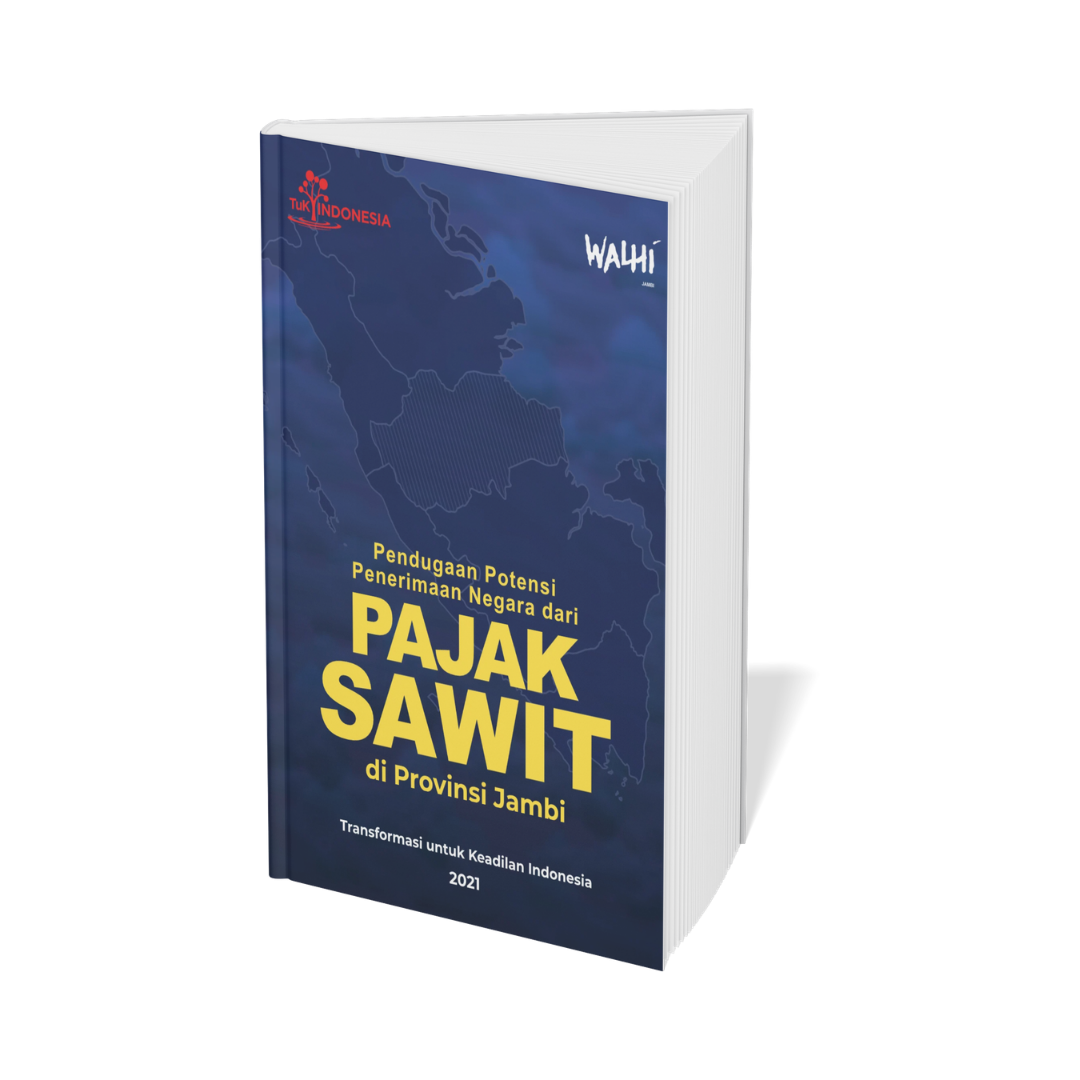
This is the second publication from a series of studies by TuK INDONESIA examining how much state revenue palm oil could generate through taxation. It follows the first study, conducted in Central Sulawesi in 2020. The 2021 study covers Jambi and uses an updated data collection method, combining field observation to validate the data with high-resolution satellite imagery for case study analysis. The goal was to produce the closest possible estimate of the tax owed.
The study builds on the findings of the first, and its starting point is how the government can collect more of the tax revenue it is due. The research focuses on the gap between estimated palm oil tax potential and the government’s targets and actual collections. Closing that gap starts with transparency, along with better capacity and wider use of technology.
Jambi is a province with high potential for land-based industries and ranks among Indonesia’s top 10 palm oil producers. Yet its Regional Own-Source Revenue (Pendapatan Asli Daerah, PAD), the income a province raises locally rather than receiving from the central government, remains low, with motor vehicle tax as its largest source. Jambi is also a repeat victim of forest and land fires, driven by extensive peatland degradation and widespread land tenure conflicts. Together, these facts show that the exploitation of Jambi’s natural resources is out of proportion to the revenue it brings in for either the state or the province itself.
This post is also available in: Indonesian